
When a boat comes out of the water, owners usually want the same three things: safe handling, clear communication and secure storage. A good dry marina process should make all three feel simple. At Eurotransporti in Zadar, dry storage is not just about placing a boat on land. It is about organizing arrival, positioning the boat correctly and keeping it accessible for the next stage.
Quick Overview
What this guide covers
In this article, you’ll see how a typical dry marina process works from arrival to final storage
- what happens when a boat arrives on site
- how positioning on land is handled
- why dry storage requires more than space alone
- what owners gain from organized handling and access
- when transport, lifting and storage work best together
Step 1: Arrival and Initial Handling
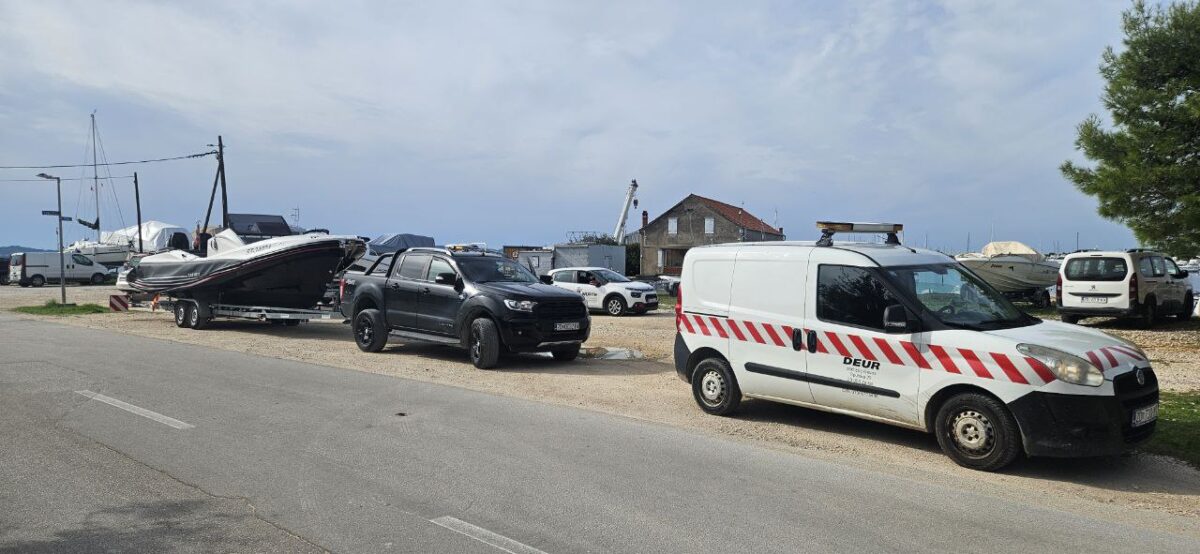
The first stage begins when the boat arrives by trailer, crane support or another planned handling method. At this point, the most important thing is control. The team checks the position, confirms the handling area and prepares the next movement.
This reduces confusion and helps make sure the boat is guided into place safely rather than moved in a rushed or improvised way.
Step 2: Positioning the Boat on Land
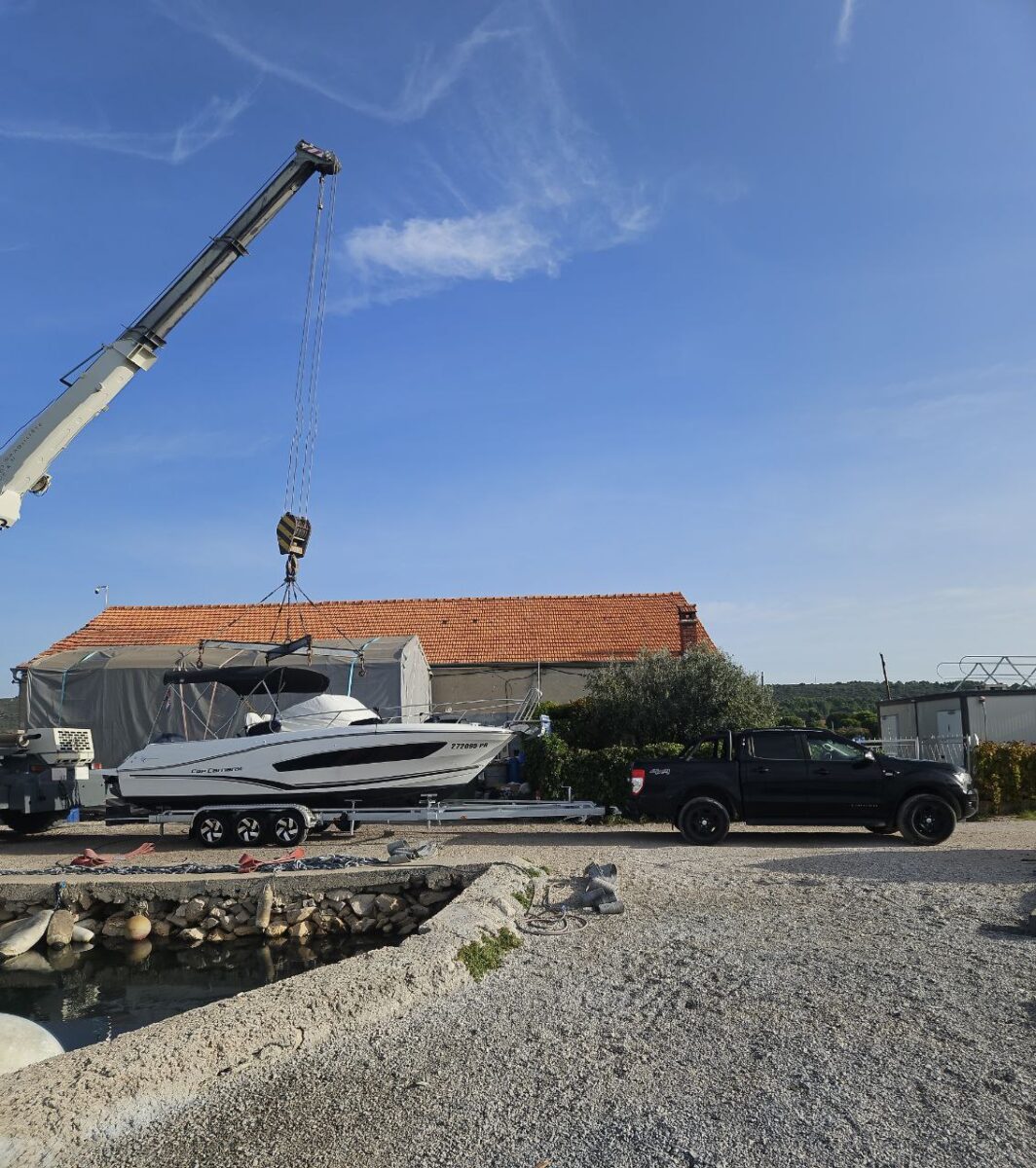
Once the boat is in the yard, correct positioning matters. The boat needs stable support and practical access, especially if cleaning, service work or inspections are planned afterward.
This is one of the main advantages of organized dry marina storage. Instead of simply placing the boat wherever space is available, the positioning is done with the next steps in mind.
Step 3: Storage, Access and Ongoing Support
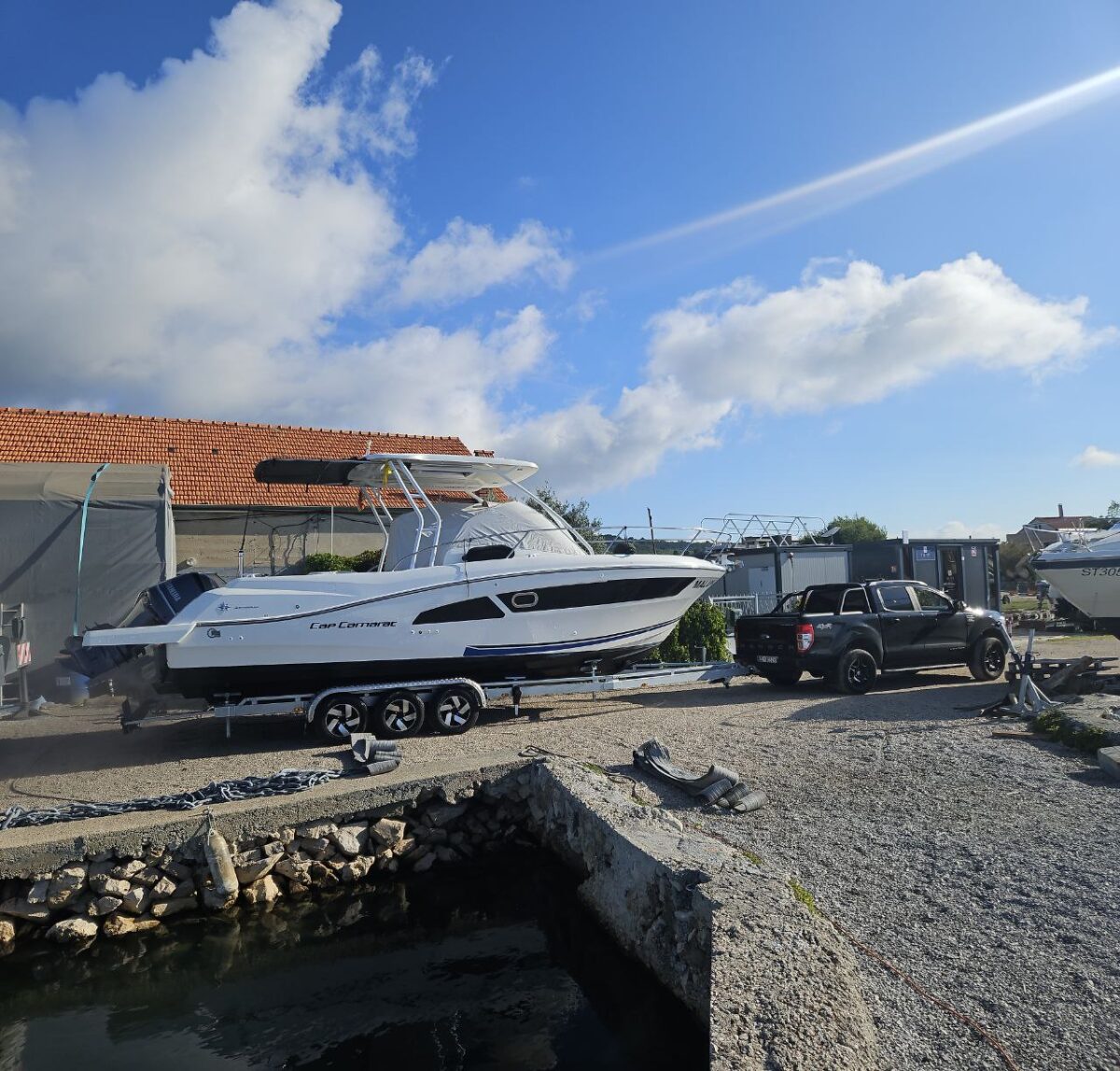
After positioning, the boat remains on solid ground in a controlled environment. This is useful for short stays between trips, longer winter storage periods or maintenance projects that require time and access.
Owners also benefit from having one location where transport, lifting, handling and storage can be connected in a practical way. That saves time and avoids the need to coordinate multiple separate providers.
Frequently Asked
Common Questions About Dry Marina Storage
How long can a boat stay in dry storage?
That depends on availability and the owner’s needs. Some boats stay for a short period between trips, while others remain on land for a full winter lay-up.
Can transport and storage be arranged together?
Yes. Combining transport, lifting and storage is often the easiest solution because it keeps the process coordinated from the beginning.
Is dry marina storage useful only in winter?
No. It can also be useful between transfers, before service work or whenever the boat needs to be kept safely on land for a period of time.
Why Eurotransporti
A Practical Dry Marina Setup in Zadar
Dry storage works best when the handling, positioning and support around it are clearly organized.
- local dry marina support in the Zadar area
- practical access for inspection, maintenance and next steps
- coordinated handling from arrival to final placement
- support for transport, lifting and storage in one workflow
Need Storage Support?
Arrange Dry Marina Storage in Zadar With Eurotransporti
If you need a safe place for your boat out of the water, Eurotransporti provides dry marina handling and storage support in Zadar with a practical, service-oriented approach.
Send us your boat type, timing and current location, and we’ll reply with the next steps and availability.


